Fraud Detection False Positive Calculator
Traditional fraud detection systems block 15-25% of legitimate transactions as false positives. AI-powered systems reduce this to 3-8%. This calculator shows the real-world impact.
Daily Transactions
False Positive Comparison
Traditional System
0 - 0 false positives daily
Blocks legitimate transactions as fraud
AI System
0 - 0 false positives daily
Keeps more legitimate transactions flowing
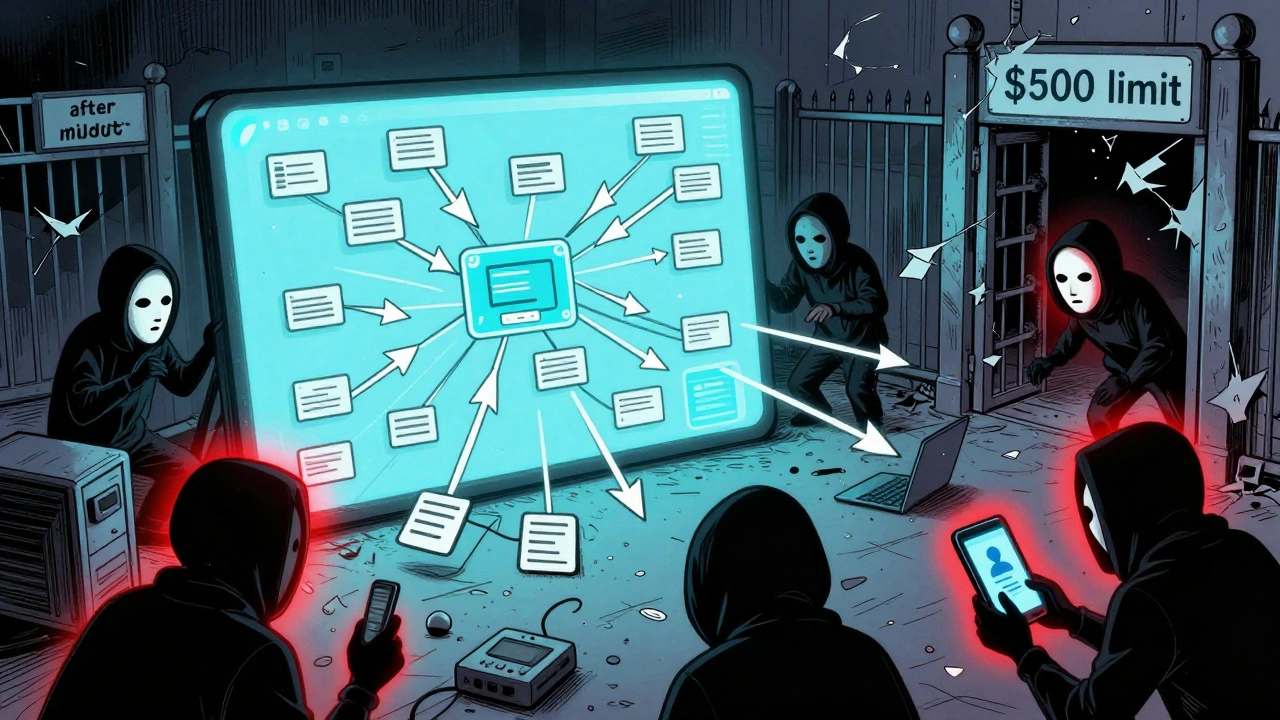
Every second, millions of transactions flash across digital banking networks. Most are clean. But a few? They’re clever. They mimic your spending. They use your voice. They even fake your face. And if your bank still relies on old rules like "block transactions over $500 in another country," you’re already behind.
Why Old Fraud Detection Fails
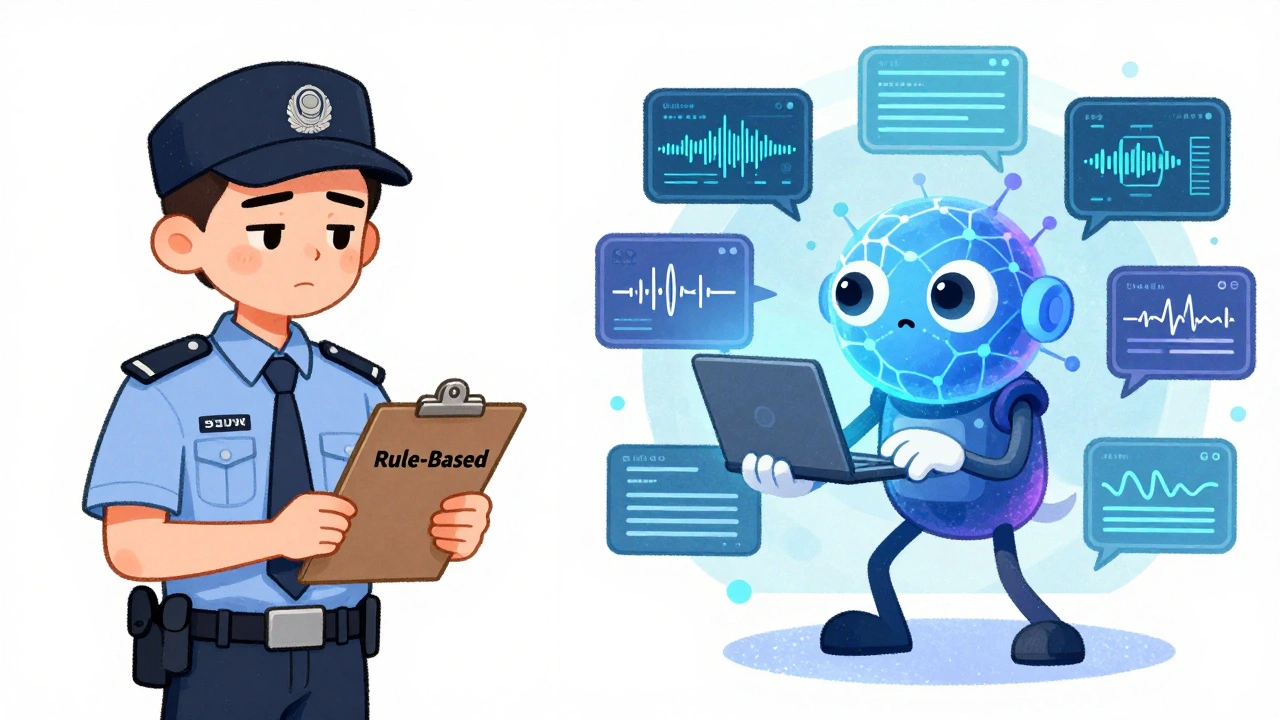
Ten years ago, fraud detection was simple: set rules. If a transaction happens after midnight in a country you’ve never visited? Flag it. If five purchases happen in ten minutes? Lock the account. Easy. But fraudsters caught on fast. They started using stolen data from past breaches. They rotated devices. They waited weeks between small purchases to avoid triggering limits. Rule-based systems became like security guards who only check IDs at the door-ignoring what happens once you’re inside.By 2025, traditional systems were missing 30% of fraud. Worse, they flagged 1 in every 5 legitimate transactions as suspicious. That’s not just annoying-it’s expensive. Customers cancel cards. Support lines overflow. Trust erodes. Banks lost over $48 billion in 2024 to fraud that slipped through these rigid systems.
How AI Sees What Humans Miss
AI doesn’t follow rules. It learns patterns. It watches how you log in, what time you pay bills, which apps you use before making a purchase, even how fast you type your password. It compares your behavior against millions of other users. And it does it in milliseconds.Take a real example: a customer normally spends $45 on coffee every Tuesday at 8:15 a.m. using their iPhone. One Wednesday, a $47 charge appears at 8:17 a.m.-same location, same merchant. But the login came from a new Android device, with a different IP address, and the app was opened via a link in an email. The AI doesn’t say "block." It says: "This doesn’t match the user’s behavior pattern. Flag for review."
That’s the difference. AI doesn’t care about location alone. It cares about behavioral context. It notices tiny timing inconsistencies. It sees when a fraudster mimics spending but can’t replicate the rhythm of real life. One bank in Ohio caught an account takeover because the fraudster made purchases exactly 23 seconds apart-every time. The real customer never did that. The AI spotted it. No human ever would.
The Tech Behind the Detection
AI fraud detection isn’t one tool. It’s a stack:- Supervised learning: Trained on past fraud cases-what fraudulent transactions looked like. It learns to spot known threats.
- Unsupervised learning: Finds anomalies without being told what fraud looks like. It notices when a user suddenly starts sending money to 12 new recipients in 48 hours.
- Graph Neural Networks (GNNs): Maps relationships. If three different accounts use the same device, IP, or email domain, GNNs connect them-even if names are different. That’s how they uncover organized fraud rings.
- Natural Language Processing (NLP): Reads customer service chats, emails, and support tickets for signs of social engineering. If someone says, "I lost my phone and need to reset my PIN," NLP flags it if the tone doesn’t match their usual language.
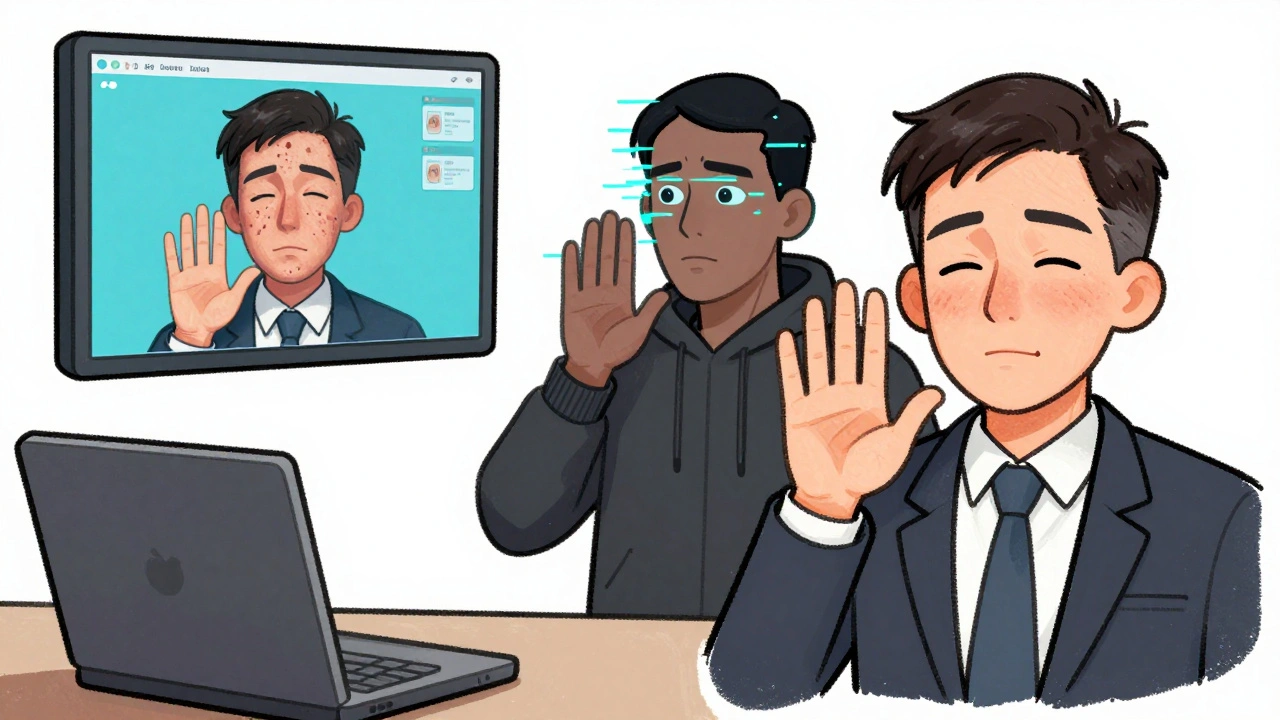
- Deep learning: Analyzes images and voice samples to detect deepfakes. New systems now scan 3D facial structure, blink patterns, and micro-movements to tell if a video is real or AI-generated.
Companies like Feedzai and Featurespace process over 10 million transactions per second. IBM’s system reduces false positives by 32%. JP Morgan’s AI has cut fraud losses by 27% since 2022. These aren’t theoretical gains. They’re live results.
AI vs. Traditional Systems: The Numbers Don’t Lie
| Feature | Rule-Based Systems | AI-Powered Systems |
|---|---|---|
| Speed | 1,000-5,000 transactions/second | 5-15 million transactions/second |
| False Positives | 15-25% | 3-8% |
| Fraud Detection Rate | 60-70% | 85-94% |
| Adaptability | Manual updates required | Self-learning, real-time updates |
| Handles Novel Fraud | No | Yes |
By early 2025, 78% of major banks had fully switched to AI. Only 35% still relied on rules alone. The shift wasn’t optional. It was survival.
The New Threat: AI-Powered Fraud
Here’s the twist: fraudsters are using AI too.They generate realistic voice samples to bypass voice authentication. They create fake IDs with AI tools that fool document scanners. They use deepfake videos to pass liveness checks during account sign-ups. In 2024, a fraud ring in Eastern Europe used AI to clone the voice of a 78-year-old woman and called her bank to transfer $220,000. The system said it was her. The voice matched. The tone matched. Even the hesitation patterns were copied.
So banks had to upgrade. Now, they use multi-angle facial scans with infrared depth mapping. They analyze how light reflects off skin in real time. They check for unnatural eye movement in videos. Some systems now require users to blink in three different directions while holding up a randomly generated number. It’s not perfect-but it raises the cost of fraud so high that most attackers give up.
Implementation Isn’t Easy
Switching to AI isn’t just buying software. It’s a rebuild.- You need clean, historical data. 68% of failed AI projects fail because the training data is garbage-too little fraud, too many false flags, or outdated patterns.
- You need data scientists who understand both machine learning and financial crime. Not just coders. Experts.
- You need to integrate with legacy systems. Many banks still run on 20-year-old core platforms. Connecting AI to those is like plugging a Tesla into a horse-drawn carriage.
- You need human oversight. AI flags. Humans decide. No system is 100% accurate. And regulators demand proof that decisions can be explained.
Most successful rollouts start small: one product line, one region, one type of fraud. Then they expand. One credit union in Wisconsin began with card fraud only. Within six months, they added account takeover detection. By year two, they were using AI to predict which customers were most likely to be targeted next-and proactively warned them.
What’s Next?
The next wave is even smarter:- Generative AI for synthetic training data: Creating fake but realistic fraud scenarios to train models on rare events-like a coordinated attack across 500 accounts.
- AI investigation assistants: Tools that auto-summarize flagged cases, pull related transactions, and suggest next steps. Analysts used to spend 45 minutes per case. Now it’s 8.
- Adaptive defense systems: AI that doesn’t just detect fraud-it changes its own rules in real time when new tactics emerge. No waiting for a patch. No human intervention.
By 2026, 95% of major financial institutions will use multimodal biometrics-combining voice, face, typing rhythm, and device motion-to verify identity. The goal isn’t just to catch fraud. It’s to make it impossible to fake.
Why This Matters for You
Whether you’re a customer or a business, AI fraud detection is changing your financial life. You’ll get fewer false declines. Your transactions will be faster. Your account will feel safer. But you’ll also notice more questions: "Please blink twice," "Confirm your voice," "Why did you log in from a different city?"That’s not paranoia. That’s protection. The old system tried to lock the door. The new one watches who’s standing outside-and knows if they’re pretending to be you.
How accurate is AI fraud detection compared to traditional methods?
AI fraud detection systems catch 85-94% of fraud attempts, compared to 60-70% for rule-based systems. They also reduce false positives by more than half-from 20% down to 5% or less. This means fewer blocked legitimate transactions and happier customers.
Can AI be tricked by deepfakes or synthetic voices?
Yes, but banks are fighting back. Modern systems use 3D facial mapping, infrared skin texture analysis, and micro-movement tracking to detect deepfakes. Voice verification now checks for unnatural pitch shifts, background noise inconsistencies, and emotional tone mismatches. These layers make it extremely hard to fool the system without physical access to the real person’s biometrics.
Do I need to do anything to use AI fraud protection?
No. It runs in the background. But you might be asked to verify your identity more often-like confirming a login from a new device or answering a quick security question. That’s the system doing its job. It’s not targeting you; it’s protecting you.
Why do some transactions still get flagged even if I didn’t do anything wrong?
AI looks for patterns, not certainties. If you suddenly travel overseas, make a large purchase, or log in from a new location-even if it’s you-the system may flag it as unusual. That’s not a mistake. It’s a precaution. Human reviewers check these cases within minutes, and over 98% of legitimate flags are cleared without delay.
Is my personal data safe with AI fraud systems?
Yes. Leading systems use encryption, tokenization, and anonymized data processing. They don’t store your full name, account number, or biometrics in plain text. Instead, they create digital fingerprints-unique patterns that can’t be reversed to recreate your identity. Regulatory standards like GDPR and DORA enforce these protections.
What happens if the AI makes a mistake?
Every flagged transaction is reviewed by a human analyst. If a legitimate transaction is blocked, you’ll get a notification with steps to resolve it-usually within an hour. The system also learns from every human decision, so the same mistake won’t happen again. Continuous learning is built into the design.
How long does it take to implement AI fraud detection?
For large banks, full deployment takes 6-9 months. Smaller institutions can start with a focused pilot in 3-4 months. The key is starting with one type of fraud-like card fraud or account takeover-before expanding. Rushing leads to poor data quality, which makes AI less effective.

Comments (4)
Sabrina de Freitas Rosa
So let me get this straight-banks are using AI to watch how fast I type my password? Cool. Now they’re gonna judge my typing mood too? I type like a drunk raccoon on a keyboard and suddenly I’m ‘suspicious’? This ain’t security, this is digital stalking with a side of corporate gaslighting. And don’t even get me started on ‘behavioral patterns’-what if I’m just having a bad Tuesday? My coffee’s cold, my cat sat on my laptop, and I mashed the keys like I was fighting a demon. Should I get locked out or get a therapist?
Also, who signed off on this? Did someone say ‘Let’s turn every human into a data point’ and nobody yelled ‘NOPE’? I miss when fraud meant someone stole my credit card at a gas station. Now I gotta prove I’m me by blinking on command while humming the theme to Stranger Things. I’m not a spy. I’m just trying to buy groceries.
And don’t even get me started on the ‘adaptive defense systems’ that change their own rules. So the AI learns… and then it gets paranoid? What if it starts thinking *I’m* the fraud because I’m too consistent? What if it decides my routine is ‘too perfect’ and flags me for being ‘AI-generated’? I’m not a bot. I’m just tired. And now my bank thinks I’m a robot pretending to be a human pretending to be a person. I’m losing my mind.
Also, why do I feel like I’m in a Black Mirror episode where the toaster is judging my life choices? I just want to pay for my latte without proving I’m human. Can we go back to PINs? At least those didn’t make me feel like I’m auditioning for a sci-fi thriller.
And if my bank says ‘We’re protecting you,’ then why does it feel like they’re holding me hostage? I didn’t sign up for this. I just wanted to buy socks. Not a biometric circus.
Erika French Jade Ross
lol i just got flagged for buying a $12 burrito in a different city and now i have to ‘verify my voice’?? like… i’m in a car with my dog barking and my kid screaming ‘mommy i need more salsa’ and they’re asking me to say ‘my name is erika’ like a robot??
ai’s cool and all but why does it feel like my bank thinks i’m a spy who forgot to memorize her own voice? i’m just a tired mom who eats burritos at 3am. not a fraud ring. not a deepfake. just… me.
also-why do i feel like i’m being watched? i swear my phone just blinked at me.
also also-can we please stop calling it ‘fraud detection’ and start calling it ‘digital anxiety generator’? i miss when the worst thing that happened was a declined card. now it’s like… am i me? am i real? do i even exist?
also also also-can i just pay cash? i’m not asking for much.
Robert Shurte
There’s a profound existential tension here, isn’t there? We outsource our identity to algorithms that, by design, must reduce us to statistical anomalies-yet we demand they recognize our humanity. The irony is that the very systems meant to protect us now require us to perform our authenticity, like actors in a security theater where the script is written by machine learning engineers who’ve never held a human hand.
And yet, the alternative is worse: a world where fraud runs rampant because we cling to brittle rules that can’t adapt to chaos. So we trade our privacy for safety, our spontaneity for predictability, our trust in ourselves for trust in a black box that learns from our mistakes but never apologizes for them.
It’s not just about fraud anymore. It’s about what we’re willing to surrender to avoid being exploited. And the saddest part? We’re doing it willingly. We click ‘agree’ without reading. We blink on command. We hum into microphones. We become data ghosts in our own lives.
Perhaps the real fraud isn’t the one stealing money. It’s the one convincing us that this is the only way.
…I’m not sure I like the person I’ve become to avoid being flagged.
Mark Vale
Okay hear me out-this whole AI fraud thing? It’s not just about catching criminals. It’s a Trojan horse. Banks don’t want to stop fraud-they want to own your biometrics. Your voice. Your blink. Your typing rhythm. They’re building a digital twin of you-and if you think they’re not selling it to advertisers or the government, you’re naive.
Remember when they said ‘we’ll never track your location’? Then came targeted ads. Now they’re tracking your heartbeat through your phone’s camera. It’s all connected. They’re not protecting you-they’re profiling you. And the ‘adaptive defense systems’? They’re not just learning fraud-they’re learning you. And when they know you better than you know yourself… who’s really in control?
And don’t tell me ‘it’s encrypted.’ Encryption doesn’t stop data leaks-it just delays them. Remember Equifax? They said ‘we’re secure.’ Then 147 million people got owned.
They’re not building a shield. They’re building a cage. And you’re handing them the key every time you say ‘my name is erika’ into your phone while your dog barks.
Wake up. This isn’t security. It’s surveillance with a smiley face and a ‘thank you for your cooperation.’