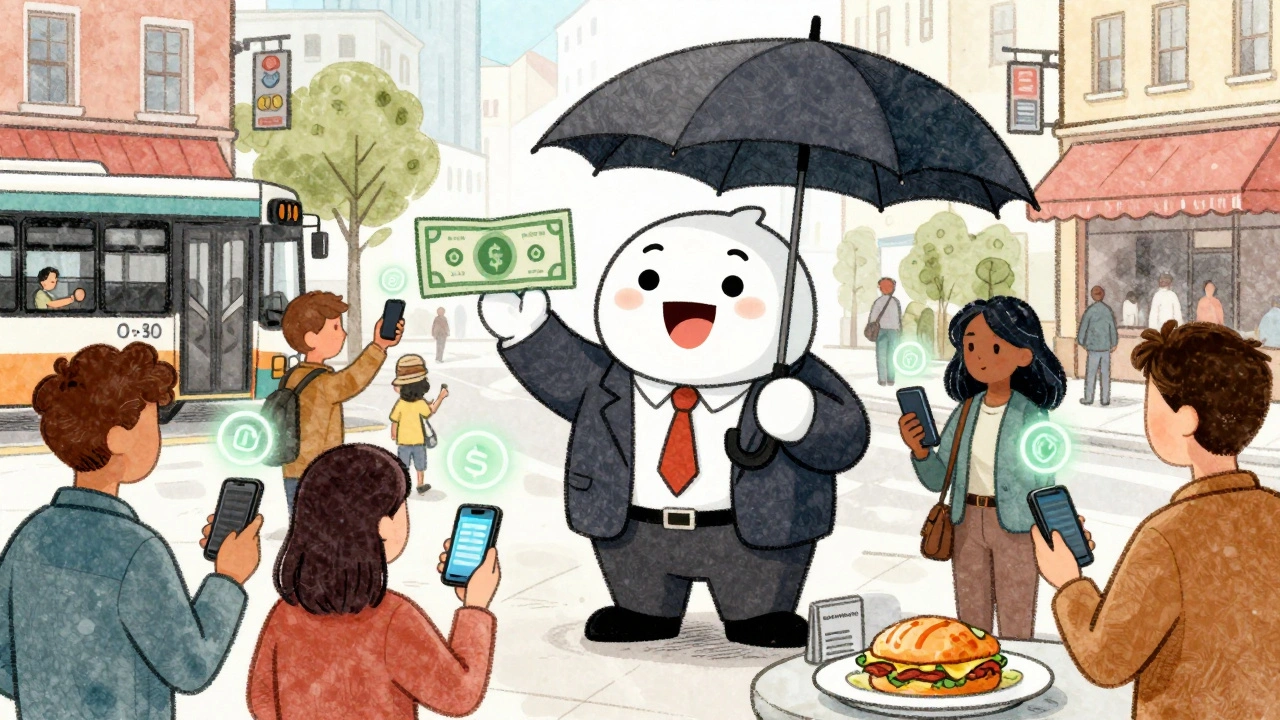
For most people, money means cash in your wallet or a balance in your bank app. But what if your money wasn’t just a number in a bank account - what if it was issued directly by your country’s central bank, like digital cash you could hold on your phone? That’s the idea behind Central Bank Digital Currencies - or CBDCs. They’re not Bitcoin. They’re not stablecoins like USDT. They’re the government’s version of digital cash, and more than 130 countries are already working on them. Some have already launched. Others are testing. The question isn’t if they’re coming - it’s how fast, and what they’ll change.
What Exactly Is a CBDC?
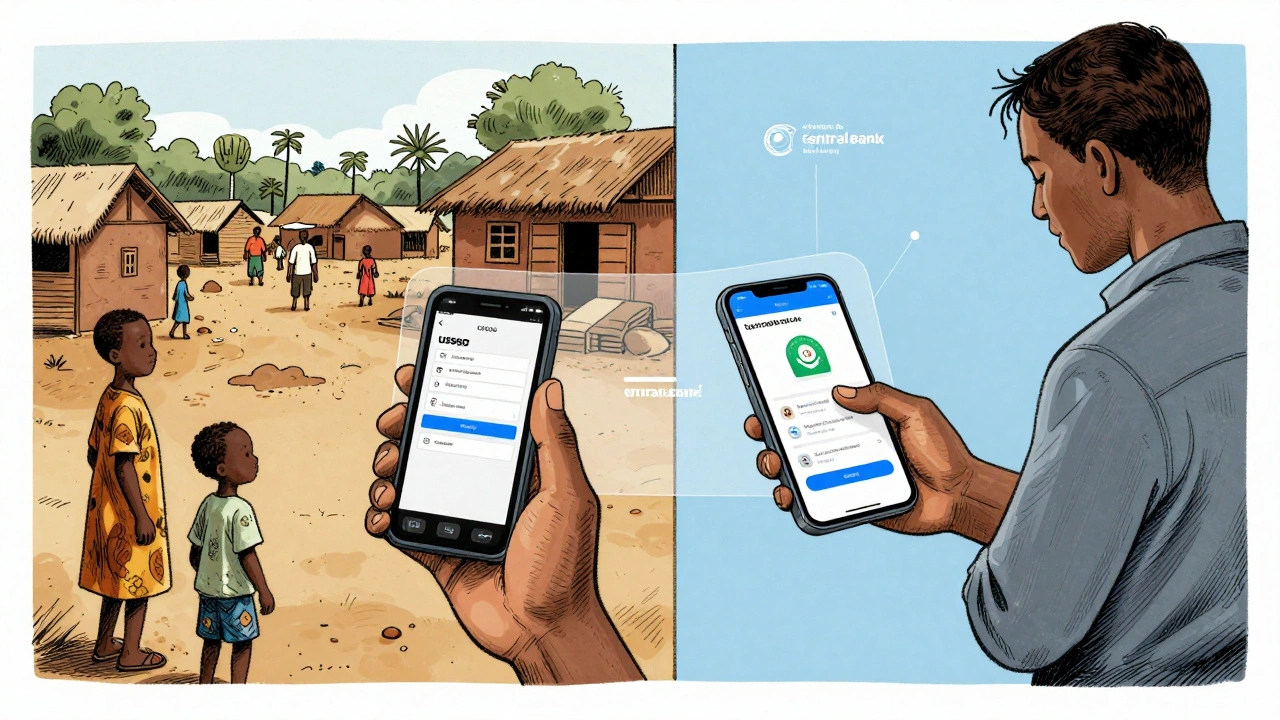
A CBDC is digital money issued by a central bank, just like paper bills or coins. It’s not a cryptocurrency. It doesn’t rely on blockchain magic or decentralized networks. It’s backed by the full faith and credit of the government, just like your dollar bill. If you hold a CBDC, you’re holding a direct claim on the central bank - not a bank like Chase or Wells Fargo. That means zero credit risk. No chance of the issuer going bust. It’s the safest digital money you can hold. There are two main types: retail and wholesale. Retail CBDCs are for everyone - you, me, the corner store owner. You use them to buy coffee, pay rent, or send money to family. Wholesale CBDCs are only for banks and financial institutions to settle large payments between each other. Most of the public conversation is about retail CBDCs because that’s where everyday people will feel the change. Countries are building them differently. China’s digital yuan uses a hybrid system - part centralized, part distributed - letting the government track transactions while still offering fast payments. The Bahamas’ Sand Dollar runs on a permissioned blockchain, which means only approved nodes can verify transactions. Nigeria’s e-Naira works with basic mobile phones using USSD codes, so you don’t need a smartphone. Sweden’s e-krona is testing offline payments, letting you tap phones like contactless cards even without internet.Why Are Countries Rushing to Build CBDCs?
It’s not just about tech. It’s about control. For decades, central banks have been the backbone of money. But now, private companies are stepping in. Stablecoins like USDC and USDT are used in crypto markets and cross-border payments. Big tech firms like Apple and Google already process billions in digital payments. If people stop using cash and start using private digital money, central banks lose influence over monetary policy. They can’t control interest rates, inflation, or credit flow if the money they’re supposed to manage is outside their reach. CBDCs are a way to reclaim that ground. They let central banks offer a digital alternative that’s safer, faster, and more reliable than private options. In countries with weak banking systems, like Nigeria or Jamaica, CBDCs can bring millions of unbanked people into the financial system. In advanced economies like the U.S. or EU, they’re about efficiency - cutting payment costs, speeding up settlements, and reducing reliance on legacy systems. Real results are already showing up. Jamaica’s JAM-DEX cut transaction fees by 47% for merchants. In the Bahamas, the Sand Dollar cut payment times from days to seconds - a huge win for people on remote islands who used to wait weeks for checks to clear. China’s digital yuan has over 260 million user accounts and is accepted by 180 million merchants. That’s not a pilot anymore - it’s a working national system.How Do CBDCs Compare to Other Digital Money?
Let’s break it down:- CBDC vs. Bitcoin: Bitcoin is volatile. Its value swings wildly. A CBDC is always worth exactly $1, €1, or 1 Naira - no surprises. Bitcoin is decentralized; CBDCs are controlled by the state. Bitcoin can’t be seized. A CBDC can be frozen or restricted - which is a feature to some, a threat to others.
- CBDC vs. Stablecoins (USDT, USDC): Stablecoins are backed by reserves, but those reserves aren’t always transparent. In 2022, Tether came under fire for not holding enough cash to back its tokens. CBDCs have no such risk - they’re direct liabilities of the central bank. But stablecoins move faster across borders and integrate with DeFi apps. CBDCs are stuck in national silos for now.
- CBDC vs. Bank Accounts: Your bank account is a promise from a private company. If your bank fails, you’re protected up to $250,000 by the FDIC - but you’re still one step removed from the central bank. A CBDC is direct access. No middleman. No risk of bank insolvency. But that also means banks could lose deposits, forcing them to rely more on expensive wholesale funding.
Real-World Problems With CBDCs
Not everything is smooth. In Nigeria, the e-Naira launched in October 2021 with big promises. But by 2024, only 0.5 million people were using it regularly - out of a population of 200 million. Why? Registration required a Bank Verification Number (BVN), which many informal workers, street vendors, and rural residents don’t have. The app was clunky. Support was poor. People didn’t trust it. In Sweden, the e-krona pilot showed that 68% of people were worried about privacy. They didn’t want the central bank tracking every coffee purchase. In the Bahamas, users loved the speed - but the app crashed during hurricanes, when they needed it most. Connectivity is still a barrier in places with weak internet. And then there’s the banking industry. Banks don’t want people moving their savings out of checking accounts and into CBDCs. If deposits dry up, banks can’t lend as much. The IMF estimates that in high-adoption countries, banks could see a 20-30% increase in their reliance on wholesale funding - which is riskier and more expensive. That’s why some banks are pushing back.Privacy: The Biggest Hurdle in the West
This is the elephant in the room. In the U.S., Europe, and Canada, people care deeply about financial privacy. They don’t want the government watching every transaction. China’s digital yuan allows the state to monitor spending - and even set rules, like freezing funds if used for banned purchases. That’s fine in some contexts, but in democracies, it’s a red flag. The European Central Bank’s digital euro proposal limits transactions to €3,000 per day to protect privacy. Beyond that, you’d need to go through a bank. The U.S. Federal Reserve has said it won’t pursue a CBDC unless it includes strong privacy protections. But how do you make digital money private and still prevent money laundering? That’s the tightrope walk. Mastercard’s 2025 report found that privacy concerns are the #1 reason Western consumers hesitate to adopt CBDCs. Even in countries with high digital literacy, like Sweden, people still prefer cash for small, anonymous purchases. The lesson? CBDCs won’t replace cash - they’ll coexist with it. And cash will stick around for at least 20-30 more years.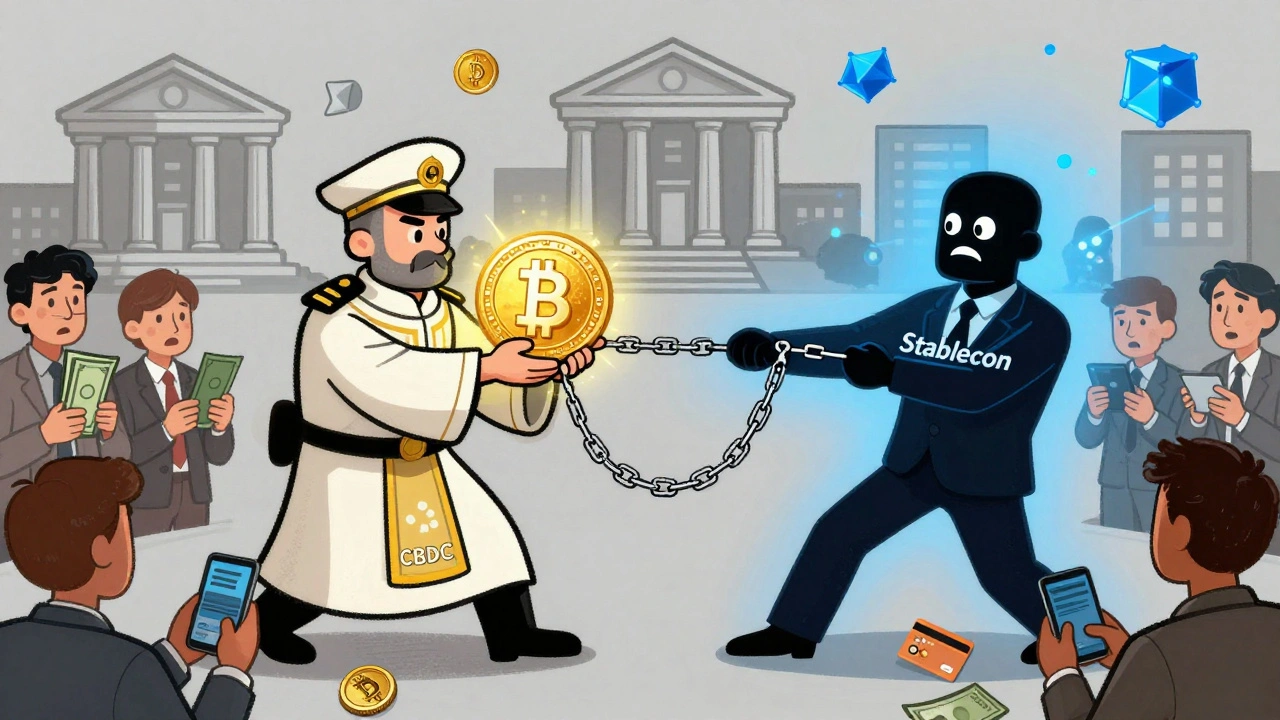
What’s Next? The Global Picture in 2025
China leads. The digital yuan is already embedded in everyday life - from street markets to public transit. It’s not just a payment tool - it’s becoming a platform for government subsidies, tax rebates, and even welfare payments that expire if not used within 30 days. That’s programmable money - and it’s the future. Africa is innovating fast. Nigeria, Ghana, and Kenya are testing CBDCs with USSD and offline options to reach people without smartphones. The Caribbean is ahead too - the Eastern Caribbean Central Bank’s DCash is used across eight islands. The U.S. is still watching. The Federal Reserve released a detailed paper in 2022 but hasn’t committed to building one. In early 2025, an executive order from the White House paused federal CBDC development, citing privacy and financial stability risks. That doesn’t mean it’s dead - it just means the U.S. is moving slowly, carefully. Cross-border payments are the next frontier. The mBridge project - led by the Bank for International Settlements - connects China, Hong Kong, Thailand, and the UAE. In early 2025, it processed $1.5 billion in pilot trades. Imagine sending money to family in another country in seconds, with no fees and no currency conversion headaches. That’s the goal.Should You Care? Yes - Here’s Why
You might think this is just for governments and banks. But it’s not. CBDCs will change how you pay, save, and even get paid. If your employer starts paying wages in CBDC, you’ll get your money instantly - no waiting for payday. If your city starts giving out grants or tax refunds via CBDC, you won’t need a bank account. If your local store accepts CBDCs, you might pay less - because merchants save on credit card fees. It also means new risks. If your CBDC wallet gets hacked, there’s no FDIC insurance. If the government freezes your account because of a protest or political stance, you can’t appeal to a bank. Privacy isn’t guaranteed. And if you’re not tech-savvy, you could get left behind. The Reserve Bank of Australia says CBDCs won’t replace cash - they’ll complement it. That’s probably right. But the future of money isn’t just digital. It’s programmable, trackable, and state-backed. The question isn’t whether you’ll use it. It’s whether you’ll understand it.How to Get Ready
You don’t need to do anything right now - unless you live in one of the 11 countries that have launched a CBDC. But if you’re in the U.S., Canada, or Europe, here’s what to watch:- Keep an eye on your central bank’s website. They’ll announce pilots and public consultations.
- Learn how digital wallets work. Whether it’s Apple Pay, Google Pay, or a CBDC app, the interface will be similar.
- Understand the trade-offs: speed vs. privacy, convenience vs. control.
- Ask your bank if they’re preparing for CBDC integration. Some already are.
- Don’t panic. Cash isn’t going away. But the digital options around it are changing fast.
Money is evolving. CBDCs are the next chapter. They’re not perfect. They’re not magic. But they’re real - and they’re coming faster than most people think.
Are CBDCs the same as Bitcoin or other cryptocurrencies?
No. Bitcoin is decentralized, volatile, and not backed by any government. CBDCs are issued and controlled by central banks, are pegged 1:1 to national currency, and have legal tender status. They’re digital cash - not speculative assets.
Can I use a CBDC to send money to someone in another country?
Not yet - most CBDCs are designed for domestic use. But cross-border projects like mBridge (connecting China, Hong Kong, Thailand, and the UAE) are testing this. By 2030, interoperable CBDCs could make international transfers fast, cheap, and direct - without needing SWIFT or intermediaries.
Will CBDCs replace cash?
Not anytime soon. Even in countries with high CBDC adoption, cash remains popular for small, anonymous, or offline purchases. The Reserve Bank of Australia and the Bank for International Settlements both say physical currency will remain relevant for at least 20-30 years. CBDCs will coexist with cash, not replace it.
Is my money safe in a CBDC?
Yes - in terms of credit risk. Since CBDCs are a direct liability of the central bank, they’re safer than bank deposits. But if your digital wallet is hacked, or your government freezes your account, there’s no FDIC-style insurance. Security depends on the app and your own practices - like using strong passwords and enabling biometric locks.
Why is the U.S. not launching a CBDC yet?
The U.S. Federal Reserve says there’s no urgent need - the current payment system works well, and privacy concerns are high. A 2025 executive order paused federal CBDC development to allow more study. The U.S. is focused on research, not rollout. That could change if stablecoins grow too dominant or if foreign CBDCs like the digital yuan become dominant in global trade.
Can the government track my spending with a CBDC?
Yes - depending on the design. China’s digital yuan allows the government to monitor transactions. In contrast, the EU’s digital euro proposal limits tracking to prevent abuse. The level of surveillance depends on the country’s laws and the CBDC’s architecture. Privacy protections are a major design choice - not a technical limitation.
Do I need a smartphone to use a CBDC?
Not always. Nigeria’s e-Naira works via USSD codes on basic phones. Some pilots allow offline transactions with limited amounts. But most advanced systems require a smartphone app. If you don’t have one, you may need to rely on banks or community agents to access your CBDC balance.
Will CBDCs affect my credit score?
Not directly. CBDCs are for spending and saving - not borrowing. Your credit score is based on loans, credit cards, and repayment history. But if you use CBDCs to pay bills on time, it could help you build financial habits that improve your score over time - indirectly.

Comments (5)
Robert Shurte
It’s fascinating-this isn’t just about money anymore. It’s about sovereignty, power, and the quiet erosion of autonomy. A CBDC isn’t merely digital cash; it’s a surveillance layer stitched into the fabric of daily life. We’ve traded anonymity for convenience before-remember when credit cards replaced cash? But this is different. This isn’t a corporation tracking your purchases-it’s the state. And once the infrastructure exists, the scope of control expands. Who decides what ‘suspicious’ spending looks like? Who draws the line between fiscal policy and moral policing? The tech is neutral. The intent behind it isn’t. And we’re not being asked. We’re being onboarded.
Mark Vale
theyre already using this to control us… i mean, look at china-their digital yuan can literally freeze your money if you buy something they dont like. and now the feds are whispering about it like its some kind of ‘efficiency upgrade’. lol. next thing you know, your cbdc balance gets reset if you protest, or your coffee purchase gets flagged for ‘excessive caffeine consumption’. they’re not building a currency-they’re building a social credit system with better ui. dont be fooled by the ‘safe’ label. nothing’s safe when the state holds the keys. #digitaldystopia
Royce Demolition
THIS IS THE FUTURE!!! 🚀💸 No more waiting 3 days for your paycheck to clear! No more bank fees! Imagine sending money to your cousin in Nigeria in 2 seconds with ZERO fees? That’s not sci-fi-that’s happening NOW. The e-Naira, the Sand Dollar, the digital yuan-they’re not experiments, they’re revolutions. Banks are scared because they’re about to get obsolete. Time to get hyped, not paranoid. Your phone is your wallet now. Embrace it. 🔥📱 #CBDCIsHere
Sabrina de Freitas Rosa
Oh wow, so you’re telling me the government is gonna know exactly how much you spent on alcohol, weed, or sex toys? 🤡 That’s not ‘financial inclusion,’ that’s parental control on steroids. And don’t even get me started on how they’ll ‘freeze’ your account if you ‘misbehave.’ Who’s the judge? Some bureaucrat who hates your TikTok? You think your grandma in rural Kansas is gonna figure out a digital wallet? Nah. She’ll be stuck with a $20 bill and a confused look. This isn’t progress-it’s tech elitism wrapped in a shiny app. And don’t even get me started on hackers. 💀
Erika French Jade Ross
Honestly? I’m just glad cash is sticking around. 🤷♀️ I don’t need the government tracking my coffee buys, but I also don’t want to be stuck with a bank that charges me $5 just to check my balance. CBDCs? Maybe. But give me the option. And please, let me use a dumbphone if I want to. 🙏