UPI: What It Is, How It Works, and Why It's Changing Digital Payments
When you send money to a friend using your phone in India, you’re likely using UPI, a real-time payment system that links bank accounts directly to mobile apps without needing card details or net banking. Also known as Unified Payments Interface, it’s the invisible engine behind instant transfers, merchant payments, and even small business transactions—no cash, no cards, no delays. Unlike traditional banking transfers that take hours or days, UPI moves money in seconds, 24/7, using just a virtual payment address—like yourname@upi. It’s not a wallet. It’s not an app. It’s a standard—a public protocol that lets any bank, app, or service connect to the same payment highway.
What makes UPI powerful isn’t just speed—it’s how it connects other systems. Payment processing, the infrastructure that moves money from sender to receiver used to be clunky, requiring multiple steps and intermediaries. UPI cuts that down to one tap. It also works with mobile payments, transactions initiated through smartphones using apps like PhonePe, Google Pay, or Paytm, turning every phone into a bank terminal. Even small vendors who don’t have card machines now accept payments through UPI QR codes. And it’s not just for people—businesses use it to get paid instantly, reconcile sales automatically, and reduce cash handling risks.
Behind the scenes, UPI relies on payment infrastructure, the network of banks, gateways, and clearing houses that ensure transactions settle securely and instantly. It’s built on open APIs, which means any app can plug in without negotiating with every bank individually. That’s why over 300 apps in India support UPI—each one offering its own interface, but all using the same underlying system. This openness is why countries like Indonesia, the UAE, and even the EU are studying UPI as a model for their own digital payment systems. It’s not about technology alone—it’s about design: simple, scalable, and inclusive.
You won’t find UPI in your U.S. or European banking app yet, but its influence is everywhere. The same principles—real-time settlement, minimal friction, and open access—are driving innovations like FedNow in the U.S. and SEPA Instant in Europe. What UPI proved is that you don’t need a credit card or a smartphone with high-end specs to join the digital economy. A basic Android phone and a bank account are enough. That’s why it’s processed over 10 billion transactions a month, making it the most used real-time payment system on the planet.
Below, you’ll find deep dives into how payment systems like UPI actually work under the hood, how fintechs build on them, and how they’re changing everything from small business cash flow to how we track spending. Whether you’re curious about the tech, the business models, or the real-world impact—this collection gives you the full picture, no jargon, no fluff.
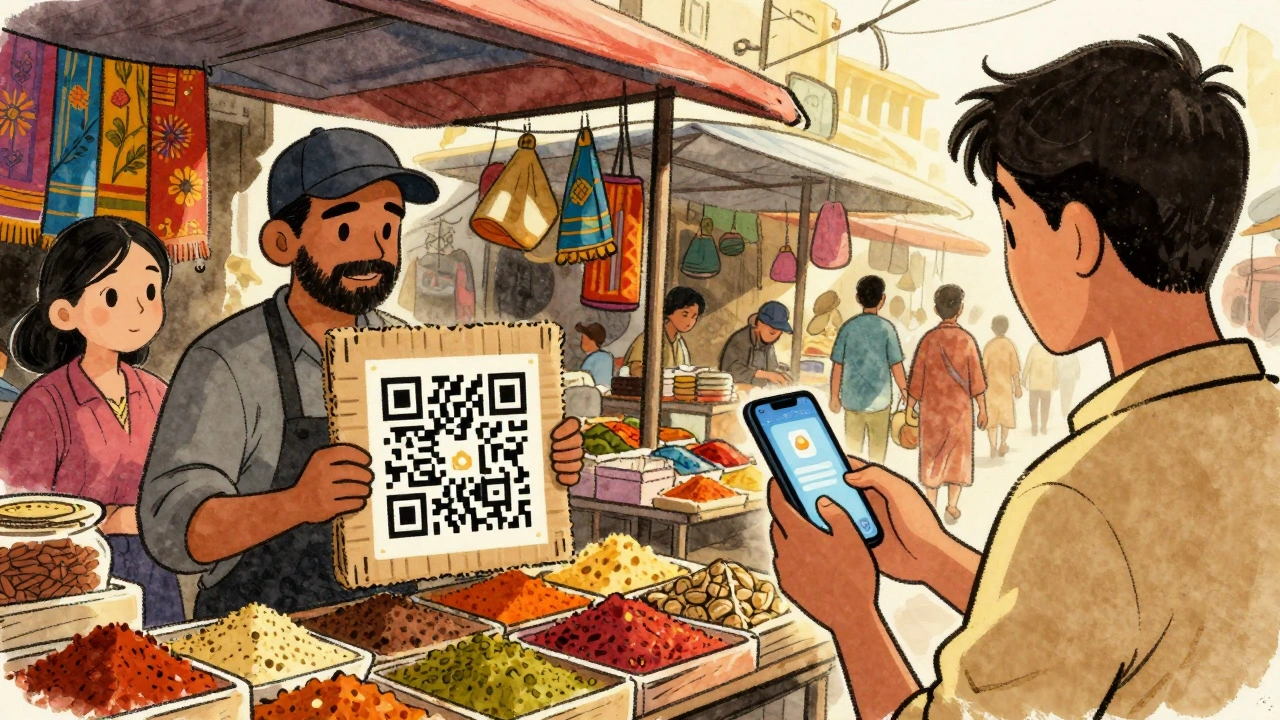
QR Code Payments: How Mobile Payments Are Evolving
QR code payments are transforming how money moves globally, offering low-cost, accessible transactions for consumers and small businesses. From India's UPI to PayPal's integration in the U.S., this technology is replacing cards in informal economies and beyond.
View More