Mobile Payments: How Digital Transactions Work and What You Need to Know
When you tap your phone to pay for coffee, you’re using mobile payments, a way to send money using a smartphone instead of physical cards or cash. Also known as contactless payments, it’s become the default way millions of people handle everyday spending—no wallet needed. This isn’t just convenience. It’s a shift in how money moves, powered by payment processing, the hidden system that connects your phone to the merchant’s bank through networks like Visa or Mastercard and secured by digital wallets, apps like Apple Pay or Google Pay that store your payment info securely.
Most people think mobile payments are just about tapping a phone, but the real magic is in the background. Every time you pay, your device generates a one-time code instead of sending your real card number. That’s why fraud rates are lower than with physical cards. Behind the scenes, payment networks, the infrastructure that routes transactions between banks and processors work with fintech, companies building apps and tools to make money movement faster and cheaper to keep transactions under a second. These systems don’t just handle your coffee purchase—they also power split bills, peer-to-peer transfers, and even small business sales through QR codes.
What’s interesting is how mobile payments are changing who gets access to financial tools. In emerging markets, people without bank accounts use mobile wallets to save, borrow, and pay bills. In the U.S., women are adopting these tools faster than men, often using them to track spending, automate savings, and avoid fees tied to traditional banking. The tech behind this isn’t sci-fi—it’s built on open banking APIs, secure encryption, and real-time alerts you can turn on in your phone’s settings. You don’t need to be a tech expert to use it, but knowing how it works helps you spot scams, choose the right app, and avoid hidden charges.
What you’ll find in this collection are real breakdowns of how these systems operate, which apps actually save you time and money, and how fraud detection keeps your transactions safe. You’ll see how payment processing works behind the scenes, why some digital wallets work better than others, and how fintech companies are making mobile payments smarter—not just faster. No fluff. No jargon. Just what you need to use your phone as your wallet with confidence.
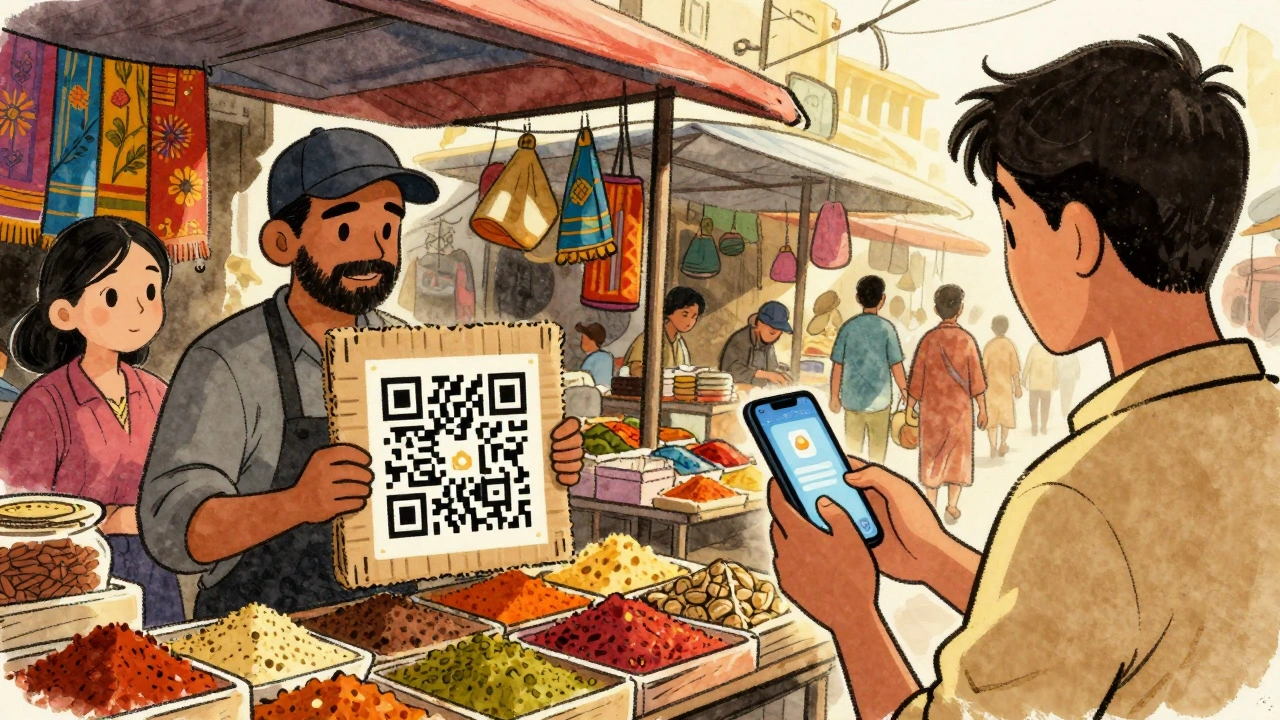
QR Code Payments: How Mobile Payments Are Evolving
QR code payments are transforming how money moves globally, offering low-cost, accessible transactions for consumers and small businesses. From India's UPI to PayPal's integration in the U.S., this technology is replacing cards in informal economies and beyond.
View More